This Dutch (feminist) peace organization empowers women and youth though peace education.
It focuses on achieving Sector Development Goals 4.7 and 16 of the United Nations; to ensure by 2030 (5 more years) that all learners acquire knowledge and skills needed to promote a culture of peace, and that all live in peaceful and inclusive societies.
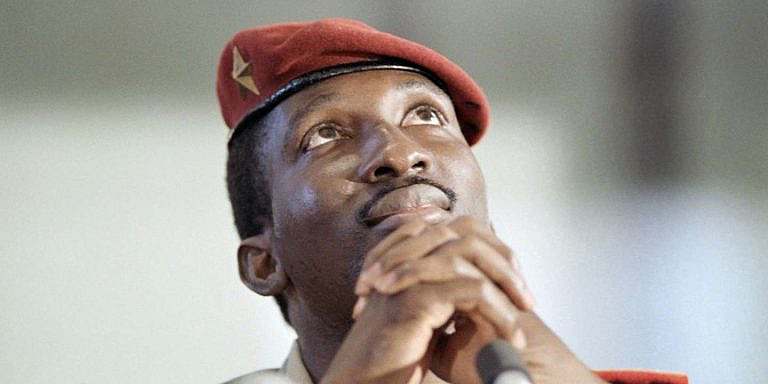
THOMAS SANKARA HAD A DREAM
We are inspired by the dream of the youthful African leader Thomas Sankara, who was the President of Burkina Faso between 1983 and 1987. He believed that empowering women and youth through education was essential for sustainable peace and prosperity.
UNITED NATIONS & PEACE EDUCATION
The Sankara Peace Foundation uses the United Nations (the largest and most successful peace organization thus far) as it’s framework. Between 2001 and 2010 the United Nations launched a decade towards a culture of peace. A major aspect of building this global culture of peace, was peace education.
Peace education equips people with the knowledge, skills, and values to resolve conflicts peacefully and build just, harmonious societies. Through innovative teaching, curricula, and policy reforms, it nurtures attitudes and actions that make peace not just an idea, but a lived practice.
UNITED NATIONS & WOMEN AND YOUTH
In their mission for global peace, the United Nations realized the importance of women. In 2000 they published resolution 1325, better known as the Women, Peace and Security Agenda (WPS). Fifteen years later, they recognized the importance of youth for peace, publishing resolution 2250, the Youth, Peace and Security Agenda (YPS).
Instead of making both women and youth only a part of the solution, we believe that they ARE the solution. Sankara Peace Foundation therefore focuses completely on women and youth as the primary agents for a culture of peace.
PROGRAMME 1: MENTAL HEALTH (INNER PEACE)
The world, and especially its youth, are facing a mental health crisis. Many youth have become lost, and are being radicalized by extreme religious or political ideologies. Inner peace derives from what is called: ‘power-within’. Power-within is one’s faith, love, spirit, belief or truth. Before external peace can be achieved, internal peace must first be realized. To go back to the Source that we all share within.
Sankara focuses on helping women and youth improve their mental health, by cultivating inner peace. Our projects, such as circles of humanity or attendance at peace centres, focus on deradicalization through community, dialogue, meditation and introspection.
CIRCLES OF HUMANITY
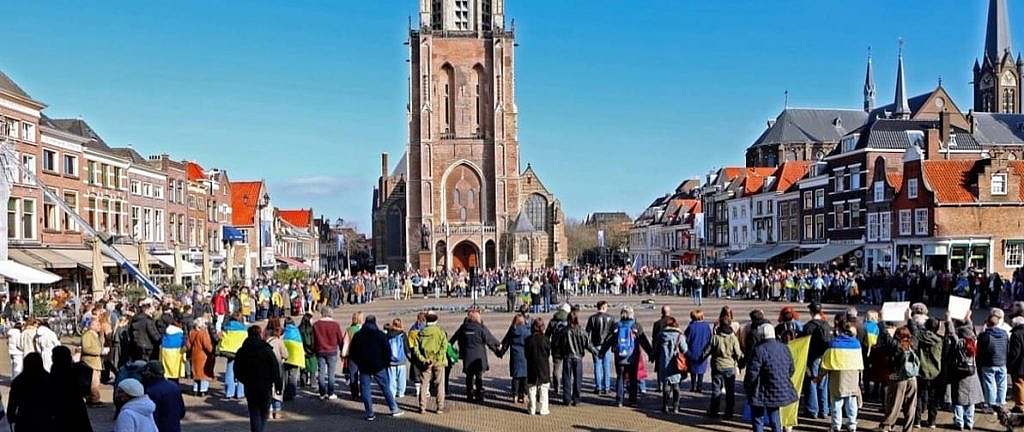
In the Western world, many are being radicalized by either far-right or far-left ideologies through disinformation, in the context of the Russian invasion of Ukraine. Through circles of humanity, citizens can gather on the market square in their cities to form a human chain (for humanity). Sankara partnered with ‘Delft supports Ukraine’ to help organize a circle of humanity in March 2025.
ATTENDANCE AT CORRYMEELA PEACE CENTRE
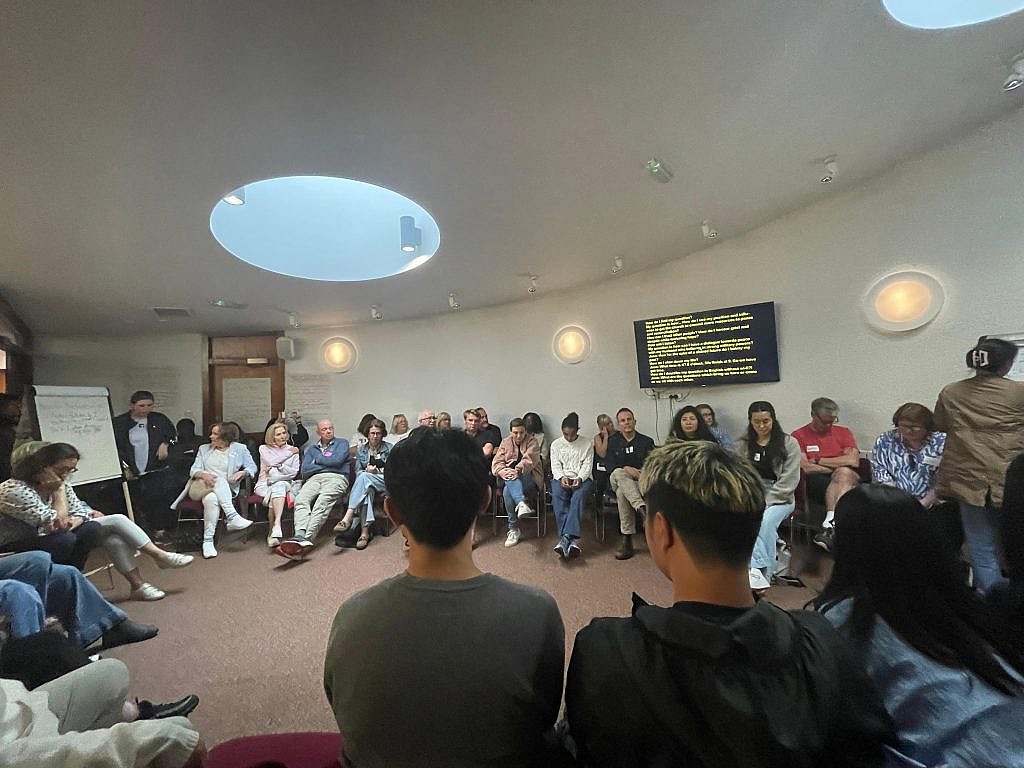
The executive director of Sankara was invited for a week-long peace training at the Corrymeela Peace Centre in Northern Ireland in July 2025. In the beautiful Northern Irish scenery, participants are invited into many moments of meditation, introspection, dialogue and building relationships, to cultivate a deep sense of inner peace.
Corrymeela led to many new peace relationships, and will result in several mental health projects for Sankara in 2026 onwards. One of those partnerships is with a South Korean NGO that inspires children to draw and exchange pictures with countries that are perceived as ‘the enemy’.
PROGRAMME 2: SKILLS AND VOCATION (SHARED PEACE)
Without the correct skills and vocation, it is impossible to create peaceful communities. Above all stands the skill to communicate well, especially with each other where both listen deeply to each other. This form of communication is called dialogue, and it is the most powerful skill for peace. Other important peace skills are related to organization, leadership, writing and teamwork. With these skills and vocations, a shared peace can be build. This is called; ‘power-with’.
YOUTH PEACE SUMMITS
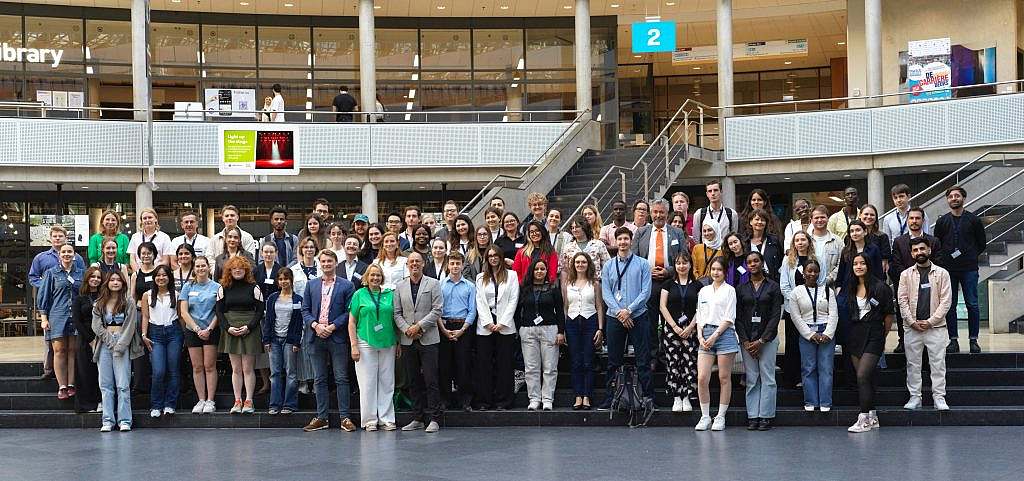
In collaboration with Ithaka Academy, Rotary Netherlands and The Hague University of Applied Sciences (THUAS), Sankara organized the first Youth Peace Summit in the Hague. 100 youth from 43 different nationalities drafted the Hague Youth Manifesto in June 2025. This manifesto will be handed over to NATO secretary-general Mark Rutte, Foreign Affairs and the Municipality of the Hague. A Youth Peace Summit will take place in the Hague annually, and could be reproduced anywhere in the world.
Cornerstones towards a more peaceful society were a focus on 1. rights-based order, 2. dialogue and 3. the role of citizens.
CIVIL-MILITARY SYMPOSIA
Western societies face an increased gap between activists and armies, especially in the context of radicalizing societies. One of the greatest gaps lies between feminist peacebuilders and experienced generals.
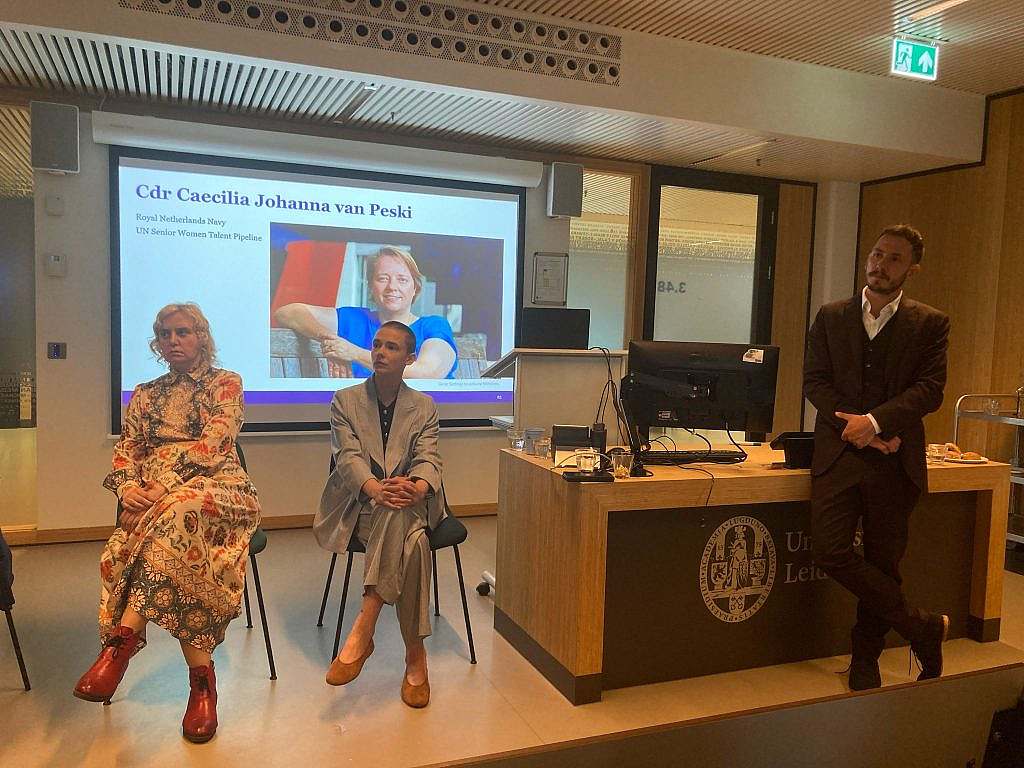
Sankara partnered with several feminist or women peace organizations in the Hague to organize a civil-military symposium in May 2025.
It hosted two famous Belarusian activists; Nobel Peace Prize nominee Olga Karach, the dirctor of ‘Our House’, and Marharyta Vorykhava, the Youth Advisor to Sviatlana Tsikhanouskaya, the (democratic) President Elect of Belarus. Furthermore, it hosted Lt. Gen (ret) Kees Matthijssen and Cdr Caecilia Johanna van Peski of the Dutch Armed Forces.
Bridging the gap between peace activists and military leaders through dialogue in the form of symposia, remains a key project of Sankara in 2026.
PROGRAMME 3: PEACE & GOOD GOVERNANCE (OUTER PEACE)
After women and youth have nurtured their inner and shared peace, they are ready to improve their peace and good governance (outer peace). This is called ‘power-to’. Projects of the Sankara Peace Foundation focus on sustainably empowering civil society through a process called democratization.
YOUTH PEACE ACADEMY
Sankara Peace Foundation (West Europe) is allying with Faraja Africa Foundation (East Africa) and the Kofi Annan Centre (West Africa) to build a Youth Peace Academy in our three regions.
The Youth Peace Academy unites, activates and improves current local peace initiatives, complementing government or UN-led peace initiatives. This is achieved through “building a culture of peace through a backbone of students.”
The alliance (Sankara, Faraja, Kofi Annan) inspires students of primary, secondary and tertiary educational institutes to become active for peace, and gathers them together in an online digital forum, where they are linked with existing local peace initiatives and organizations.
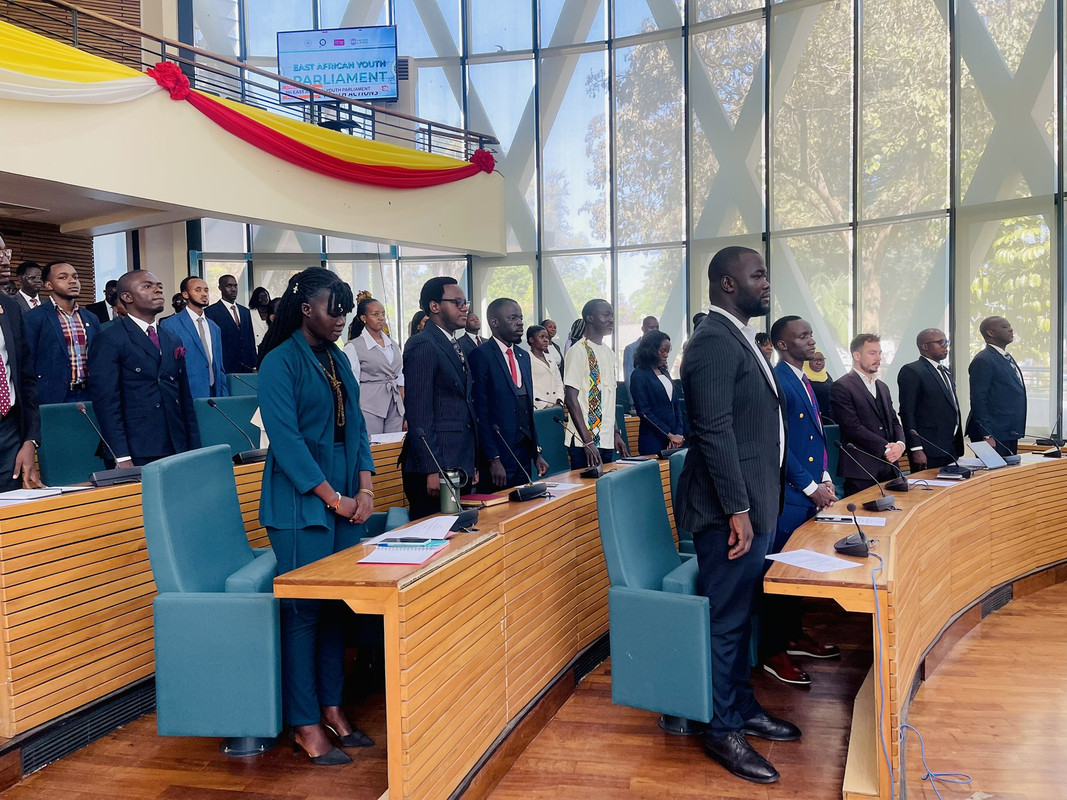
It was launched in September 2025 at the East African Youth Parliament in Tanzania.
EU-AFRICAN CIVIL SOCIETY COLLABORATIONS
Sankara believes in being for something, not against something. As such, we work together with both government, military and opposition to strengthen civil society in Africa, based on the success of the European Union in Europe.
Contributing to civil society is a sustainable approach to democratization. Sankara Peace Foundation functions as a bridge between European funding and democratic values, and African civil society organizations serving local communities.
CORE VALUES
Innovative
Sankara prides itself on innovative and creative approaches to solve long-standing problems. We are usually pioneers of new approaches and projects.
As a young peace start-up we are dependent on donations, funds and legacies. Do you also believe in the empowerment of women and youth through peace education? Then consider becoming a monthly donor or support us with a one-time donation via PayPal.